
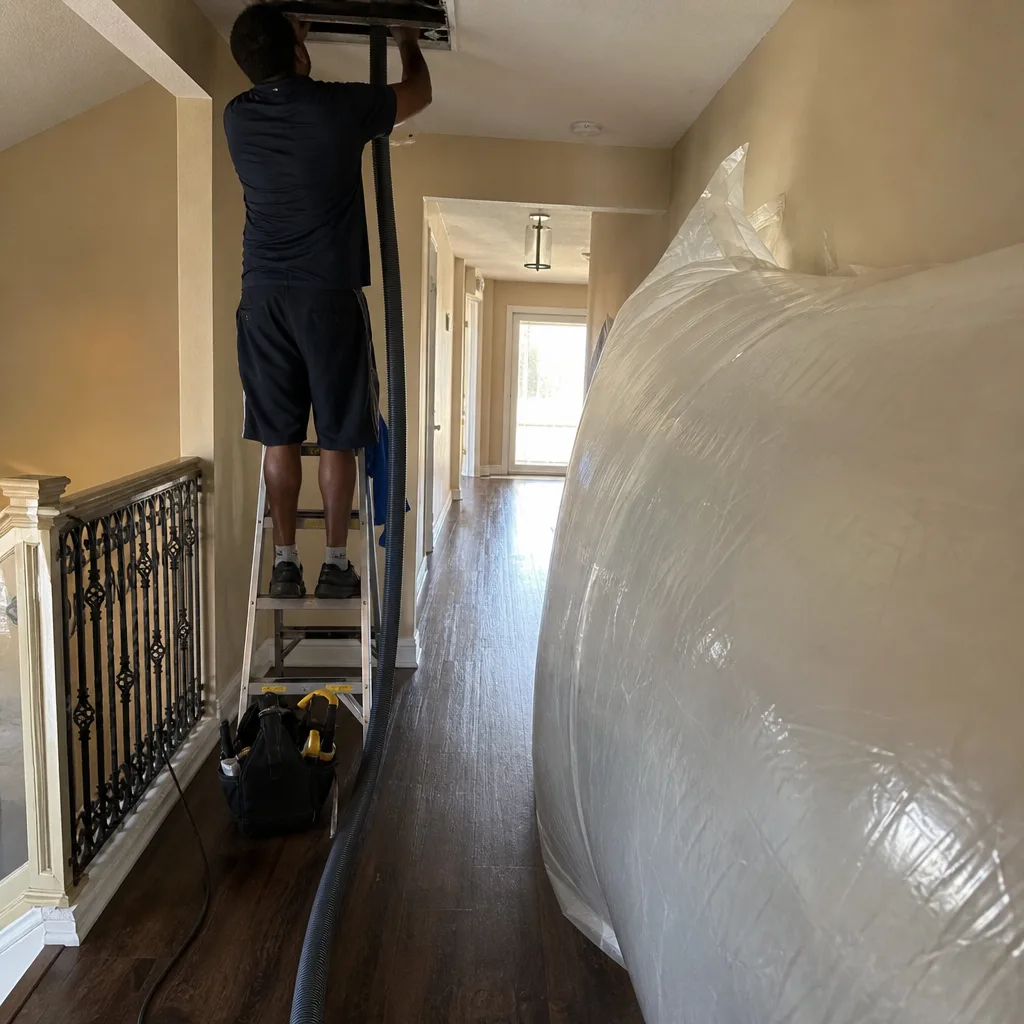
Last updated November 15, 2026
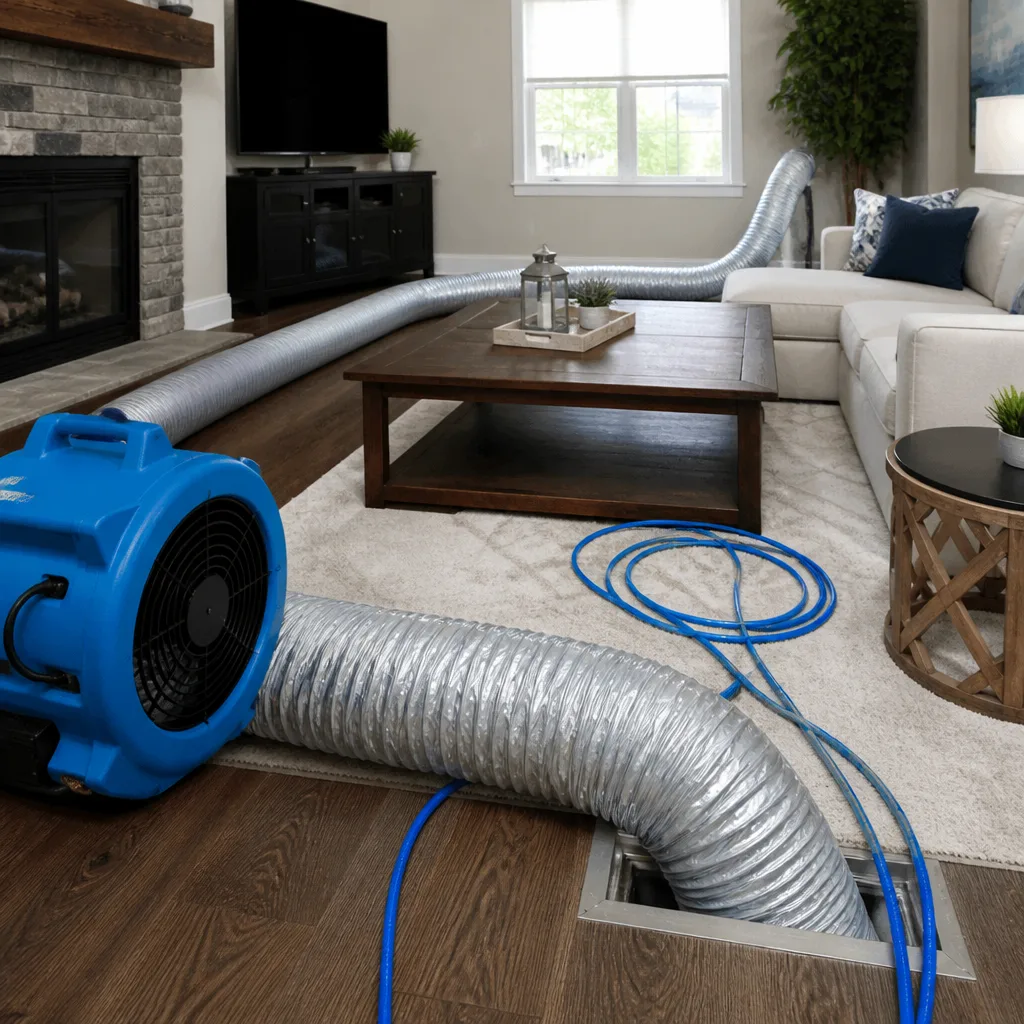 Whole-home duct cleaning
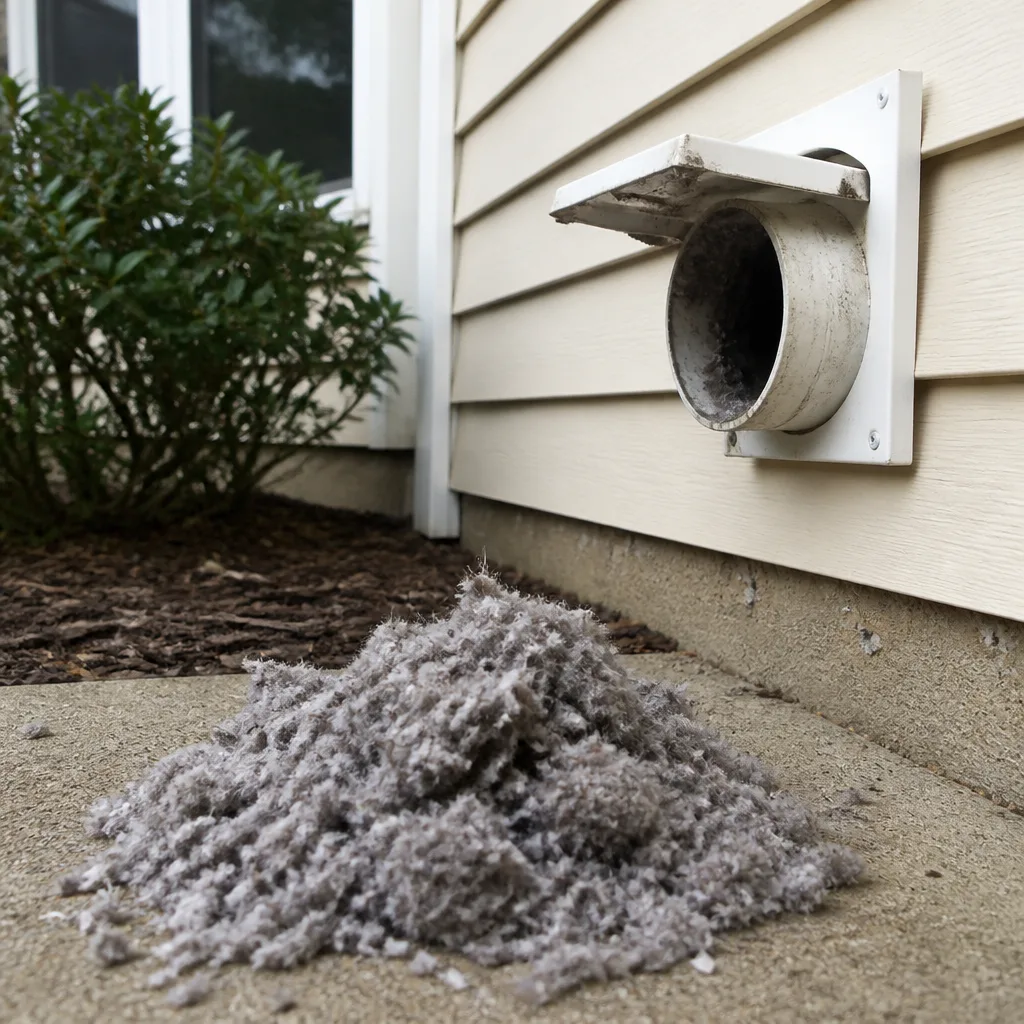 Dryer vent cleaning
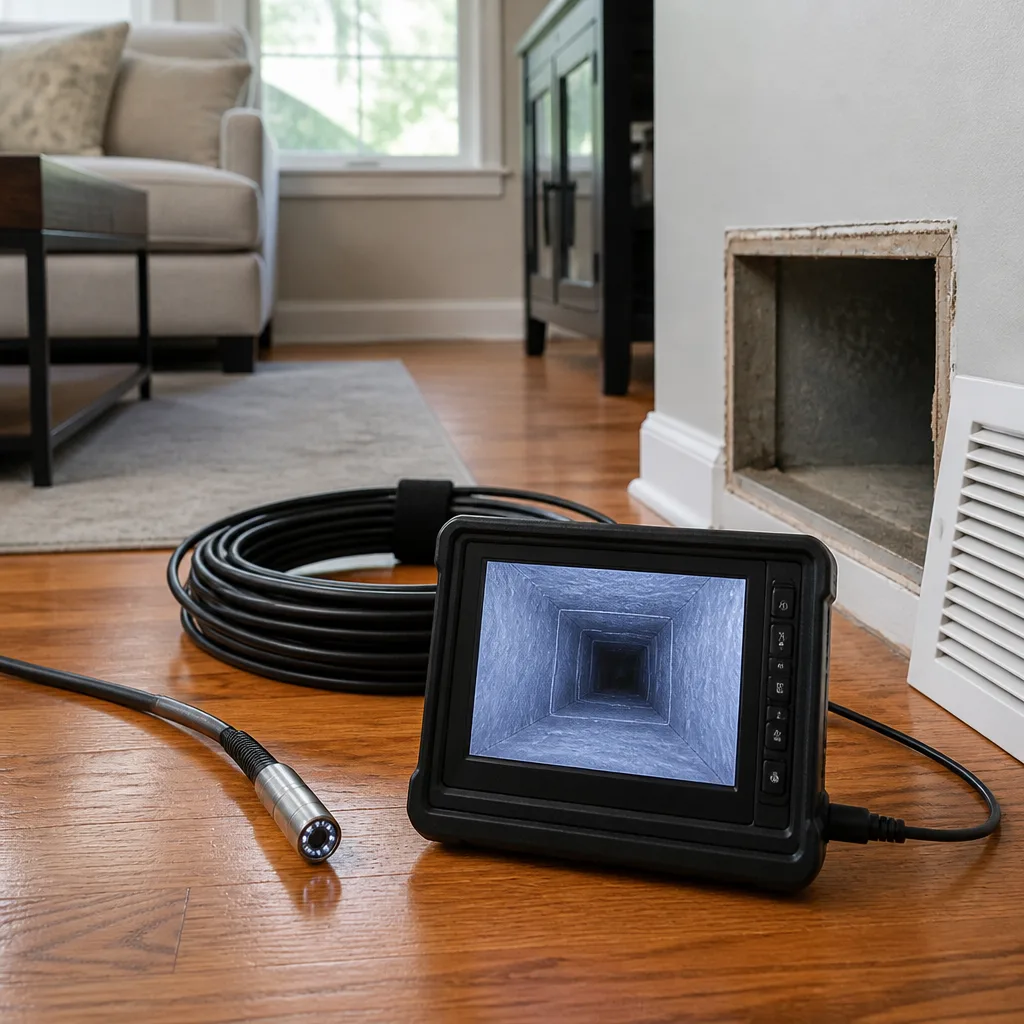 Camera inspection
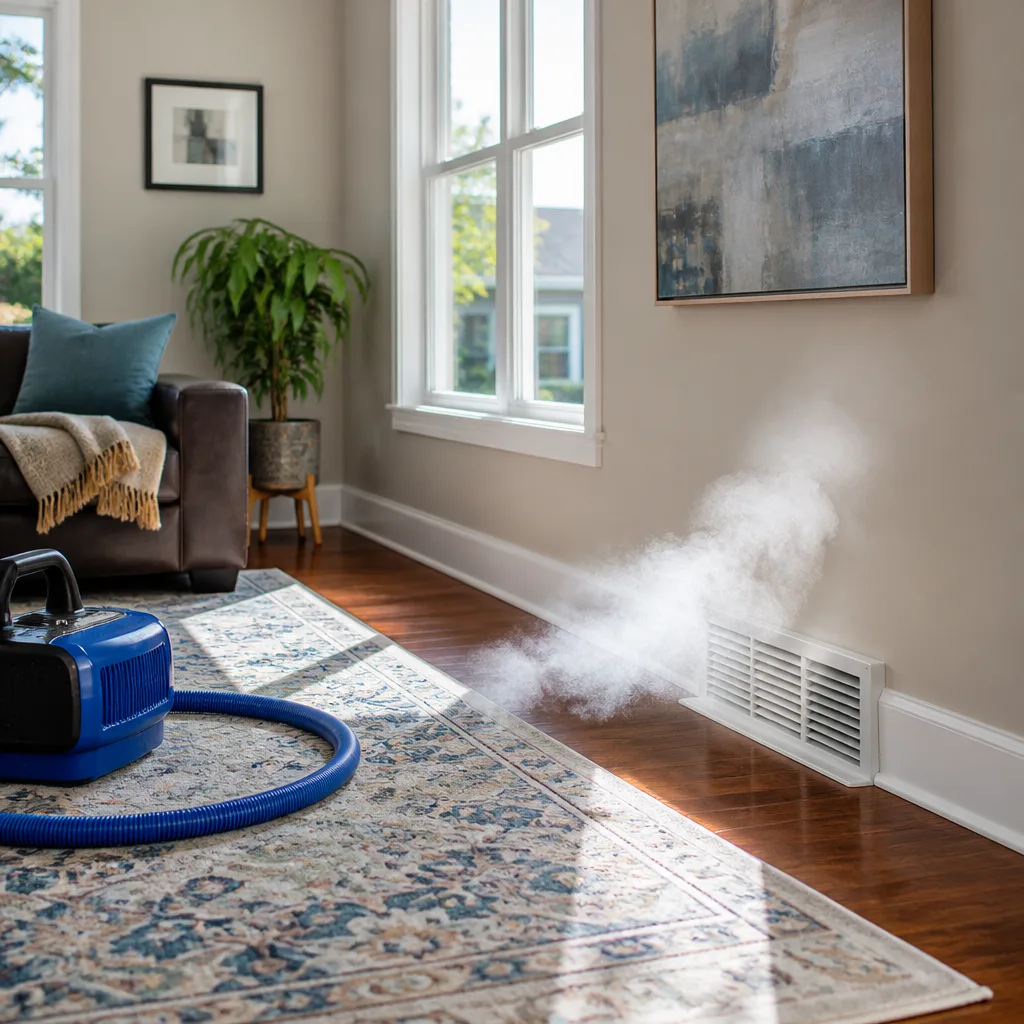 Sanitizing & deodorizing
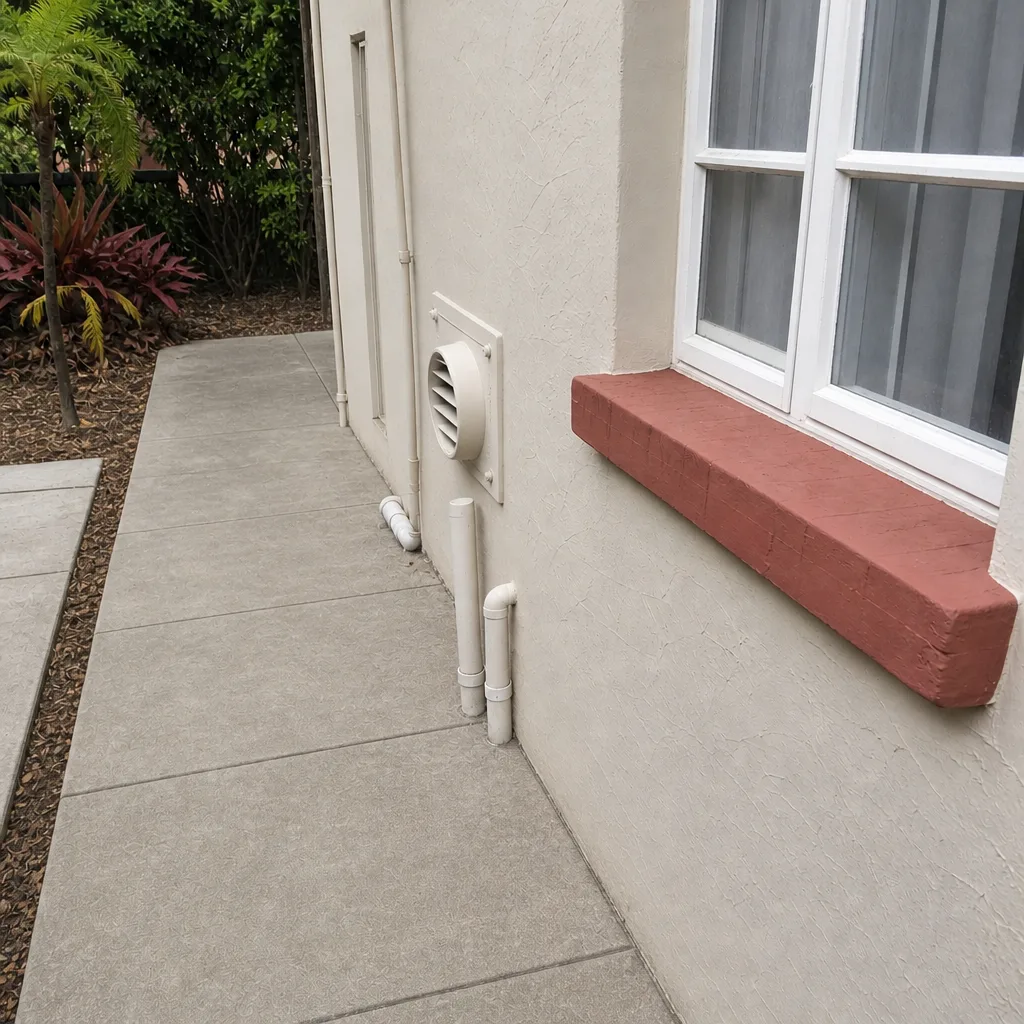
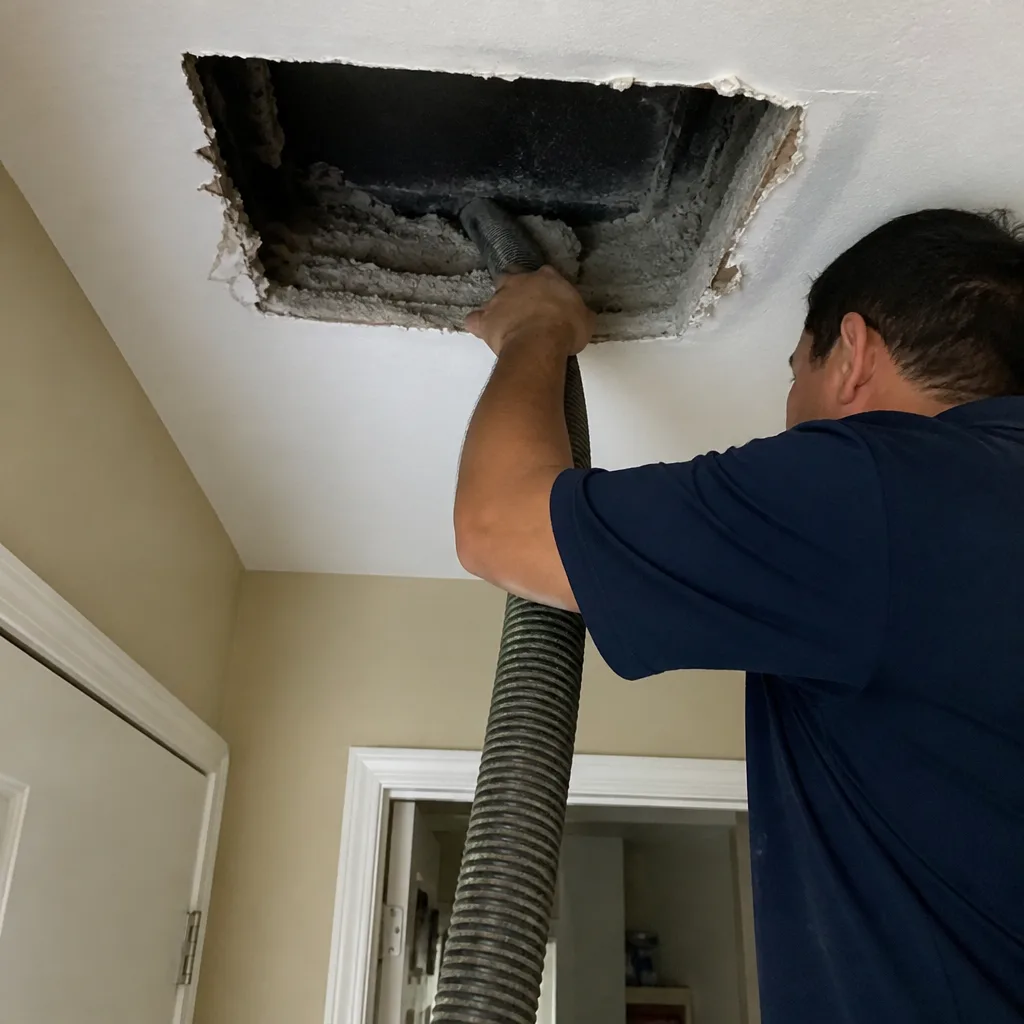
Whole-system duct and dryer vent check with before-and-after photos - you see exactly what came out of your vents
That "$99 whole-house special" is a bait ad - the real number appears once they are in your hallway, or the "clean" is a shop-vac at the register. We photograph the inside of your ducts before and after instead.
The Complete Guide to Air Duct Cleaning in Boca Raton
Most advice about duct cleaning was written for houses that sit sealed up through a hard winter and run the furnace for a few months. That’s not Boca Raton. Here, the air conditioner is the engine of the house and it runs through almost every month of the year, pulling air through the same ducts again and again. Warm, humid air plus constant circulation is a different problem than dry furnace air, and the cleaning has to match. This guide walks through why Boca Raton ductwork gets dirty the way it does, what the construction boom of the 1970s through 1990s left behind, what a real cleaning according to industry standards involves, and how to verify the work was actually done. By the end you’ll know how to judge a quote instead of just comparing the number on it.
Quick Answer
Air duct cleaning in Boca Raton means removing built-up dust, debris, and moisture-driven biological growth from the supply and return ducts of a central air system, then verifying the result with photos and a documented inspection. Because Boca Raton homes run their AC most of the year and humidity stays high, ducts here tend to accumulate contamination faster than in dry or northern climates, so a properly equipped cleaning usually matters more and sooner. A legitimate job uses negative-pressure vacuum equipment plus mechanical agitation, follows the NADCA ACR standard, and includes before-and-after documentation of your own ducts.
Styles & brands we work with
- Whole-home duct cleaning
- Dryer vent cleaning
- Camera inspection
- Sanitizing & deodorizing
Table of Contents
- Why Duct Contamination Looks Different in Boca Raton
- Humidity, Biofilm, and What Grows Inside Ducts
- What 1970s – 1990s Construction Means for Your Ducts
- What NADCA’s ACR Standard Actually Requires
- Equipment: Truck-Mount Vacuums vs. Portable Units
- How a Proper Air Duct Cleaning Job Goes
- What a Legitimate Post-Cleaning Inspection Looks Like
- What Duct Cleaning Costs in Boca Raton
- Common Mistakes to Avoid
- When to Call a Professional
Why Duct Contamination Looks Different in Boca Raton
Here’s the variable most cleaning guides ignore: how much of the year the system actually moves air. In a climate where the AC runs through the bulk of the calendar, dust, pollen, and humidity-borne particles pass through the same duct surfaces far more often than in a house that runs its system a handful of months. The air handler stays busy. The filter loads up faster. The return side pulls in whatever is floating around the house, and the supply side pushes conditioned air back out through the same channels again and again.
That constant circulation is why air duct cleaning in Boca Raton tends to be less about a one-time “spring cleaning” and more about a system that quietly loads up over time. Add the region’s humidity and you get conditions a dry-climate checklist never accounts for. Three things drive contamination here:
- Run time. The system moves a lot of air for most of the year, so particulates have more chances to settle on duct surfaces.
- Humidity. Moisture in the air and in duct surfaces feeds biological growth that dry air suppresses.
- Sealed, cooled spaces. Homes stay closed and air-conditioned, which means the same air recirculates rather than cycling out through open windows.
None of that means every Boca Raton home needs cleaning this month. It does mean the “once every several years, whenever you get around to it” advice you’ll read elsewhere tends to run behind here. We treat the local climate as a real input, not a footnote.
Humidity, Biofilm, and What Grows Inside Ducts
The single biggest difference between a Boca Raton duct system and one in a dry climate is moisture. When the AC runs, cooled air meets warm humid air in and around the ductwork, and condensation forms on cool surfaces. Even a small, recurring damp patch inside a duct is enough for biofilm – a thin layer of microorganisms that clings to duct walls – to get a foothold. Once it’s there, dust sticks to it, and the layer thickens.
You can’t see biofilm from the vent in your living room. What you might notice is a musty or “dirty sock” smell when the system kicks on, more dust settling on surfaces, or allergy-type symptoms that ease when you’re away from home. Those are signals, not proof. The point is that in Boca Raton’s climate, “dust” and “moisture-driven growth” often show up together, and a cleaning that only blasts loose dust without addressing the damp, clinging layer leaves the problem behind.
What this means for how the job is done
A cleaning built for humid-climate contamination has to agitate the duct surfaces, not just pull air through them. That’s why equipment choice matters. Professional-grade systems like Rotobrush and Nikro use mechanical agitation – a rotating brush or air whip inside the duct – to physically break the film and debris loose, while a high-powered vacuum carries it out of the system. Suction alone, with no agitation, tends to skim the surface. And the damp conditions that feed biofilm are the same ones that make a properly sealed, well-drained system so valuable, which is where Ashton Air Duct Cleaning pairs cleaning with repair work when ducts are letting in moisture or leaking conditioned air.
If you smell something musty when the AC starts and it’s been that way for a while, it’s worth having someone look at the ducts themselves, not just the filter.
What 1970s – 1990s Construction Means for Your Ducts
A large share of Boca Raton’s housing went up during a building boom that spanned the 1970s into the 1990s. If your home is from that era, there’s a good chance your ductwork is flexible – the insulated flex duct that became common in that period – rather than rigid sheet metal. That matters because flex duct ages and fails differently.
Flex duct is a plastic inner liner wrapped in insulation and an outer jacket. It’s efficient and cheap to install, and it bends easily around tight spaces. It also has a few weak points that show up after decades:
- Sagging and kinks. Flex duct that loses support can dip or pinch, creating low spots where debris and moisture collect.
- Liner damage. The inner liner can tear or separate, exposing fibrous insulation to the airstream.
- Loose joints. Taped or clamped connections work loose over time, leaking air into attics and walls.
- Crushed sections. Where it’s been stepped on or compressed, airflow drops and dust builds.
Cleaning flex duct takes a different hand than cleaning sheet metal. A brush that’s too aggressive can tear the liner. A vacuum that’s too weak won’t clear a sagging run. And when a section is genuinely damaged – torn liner, crushed span, disconnected joint – the honest answer isn’t “we’ll clean around it.” It’s repair. That’s why we treat air duct repair as part of the same job, not a separate appointment you have to schedule with someone else. If your ducts are old flex that’s been quietly degrading since the ’80s or ’90s, a technician who can both clean and fix is worth more than one who can only clean.
What NADCA’s ACR Standard Actually Requires
You’ll see “NADCA certified” and “follows NADCA standards” on a lot of duct cleaning websites. The National Air Duct Cleaners Association publishes the ACR standard – the industry’s recognized benchmark for assessing and cleaning HVAC systems – and it’s worth knowing what it actually asks for so you can tell the difference between a company that follows it and one that just cites it.
At a high level, the ACR standard covers how a system should be assessed before cleaning, how the cleaning itself should be performed to protect the system and the home, and how the work should be verified afterward. In practical terms, a company following it does several things a coupon-driven operation typically skips:
- Inspects before cleaning. A technician looks at the system first and assesses condition, not just quotes a price sight-unseen.
- Protects the home and system. Proper containment, coverings, and careful handling of components that shouldn’t be disturbed.
- Puts the system under negative pressure. A vacuum strong enough to keep dislodged debris from settling back into the living space.
- Cleans the components that matter. Supply and return ducts, registers, the air handler and coil area as appropriate – not just the easy-to-reach runs.
- Verifies the result. A post-cleaning inspection and documentation, ideally with photos of the ducts themselves.
How to verify, not just take their word for it
Ask two questions before anyone starts. First: can you show me before-and-after photos of my own ducts, not a stock example? Second: what does your post-cleaning inspection include? A company following the standard will answer both without hesitation. If a quote is built entirely around a low headline price and a promise, and nobody can tell you how they’ll document the result, that’s your signal to keep looking.
Equipment: Truck-Mount Vacuums vs. Portable Units
The equipment on the job is one of the clearest tells between a real cleaning and a quick pass. There are two broad categories, and the difference shows up most in larger homes – which describes a lot of Boca Raton’s two-story houses with long duct runs and multiple zones.
A truck-mounted vacuum is a high-powered unit that connects to the duct system by hose and pulls a strong, steady negative pressure across the whole system at once. That constant pull keeps loosened debris moving out of the ducts and into the collection unit rather than drifting back into rooms. On a large system with long supply and return runs, that power is what makes a thorough cleaning possible.
A portable unit is smaller and easier to move room to room. Portables have their place, especially in tight spots or as support equipment, but a single small portable unit on its own struggles to generate the sustained vacuum a large two-story system needs. When the vacuum is underpowered, debris gets agitated but not fully removed.
What to look for and ask about
- Negative-pressure capability sized to the home. Bigger system, stronger vacuum.
- Mechanical agitation tools. Brushes and air whips that reach the full length of each run.
- Named professional equipment. Systems like Rotobrush and Nikro are built for this work; if a company can’t tell you what they use, that’s a fair question to press on.
- Filtration and containment. HEPA-level filtration keeps what’s loosened out of your air.
We use professional-grade Rotobrush and Nikro systems precisely because they pair real agitation with real extraction. Suction is half the job. Loosening the contamination is the other half, and on a Boca Raton two-story with long flex runs, the two have to work together.
How a Proper Air Duct Cleaning Job Goes
A good cleaning follows a predictable order. Here’s what a typical visit involves, start to finish:
- Walk-through and assessment. The technician checks the system layout, vent count, filter condition, and any visible issues like sagging flex duct or loose joints.
- Protecting the home. Floor coverings and containment are set up around work areas.
- Setting negative pressure. The vacuum connects to the system so loosened debris is pulled out, not blown into rooms.
- Agitating each run. Mechanical tools work through supply and return ducts, breaking loose dust and biofilm from duct walls.
- Cleaning components. Registers and grilles, the air handler area, and the coil region as appropriate to the system.
- Repairing what’s found. Torn liner, crushed or disconnected sections, and leaky joints can be addressed on the same visit rather than left for a second contractor.
- Verification. A post-cleaning inspection with photos so you can see the result, not just hear about it.
Because we handle cleaning, repair, and dryer vent cleaning as core services, a single visit can take care of the whole air system. The dryer vent side is worth calling out separately, since a clogged dryer vent is a fire-safety concern, not just an air quality one, and it’s often the item homeowners put off because it’s out of sight. Getting both handled together saves you a second appointment and a second handoff.
And if you’re comparing us to other providers in Boca Raton, ask each one the same questions: what equipment, what inspection, what documentation. The answers will sort themselves out.
What a Legitimate Post-Cleaning Inspection Looks Like
This is the part most homeowners never see clearly explained, and it’s the part that separates a documented job from a hopeful one. A real post-cleaning inspection isn’t a technician telling you “looks good.” It’s a check of the system against the work that was promised, with evidence you walk away with.
What to expect:
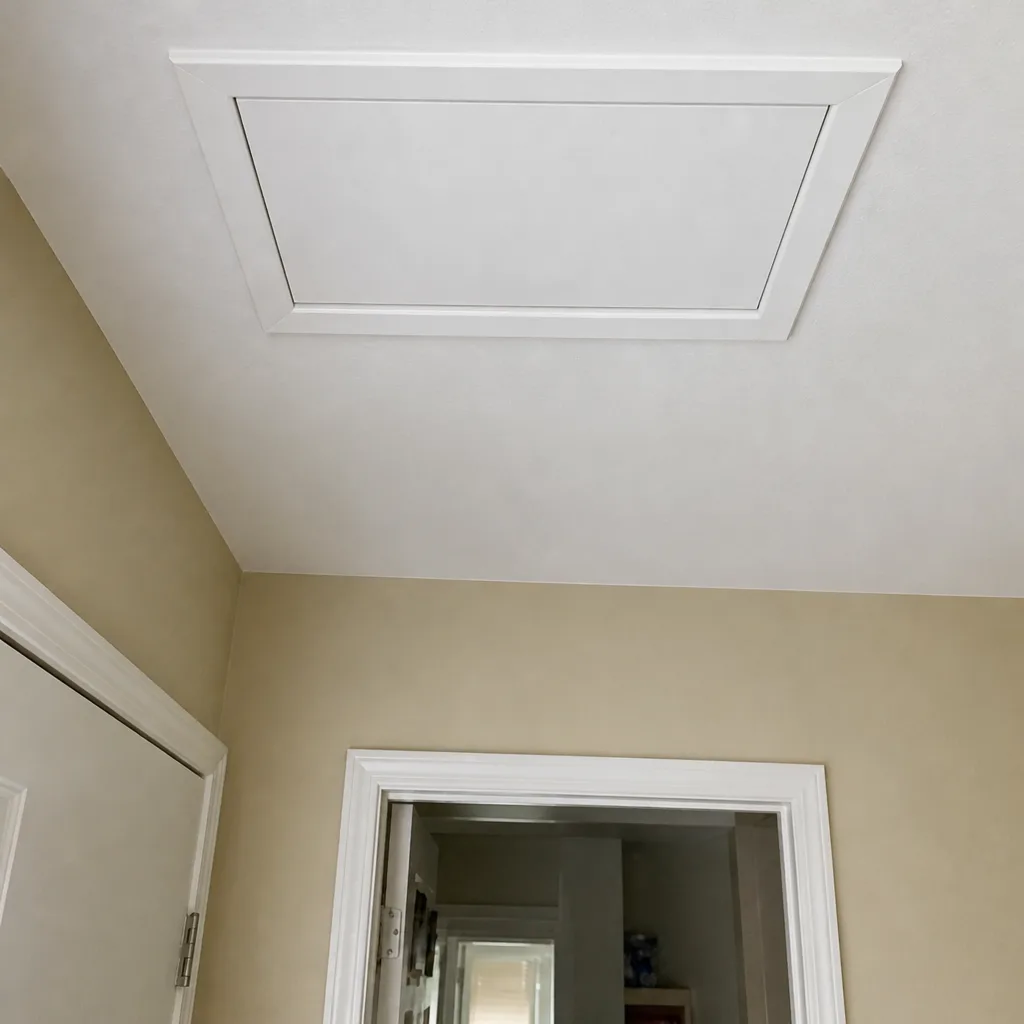
- Photos of your ducts. Before and after, showing the inside of the runs, not a generic example from a brochure.
- A visual check of components. Registers, the air handler area, and accessible duct surfaces.
- Confirmation that access points were properly closed. No gaps left where a technician cut in.
- A note on anything that couldn’t be fully cleaned and why. Damaged or inaccessible sections should be identified, not glossed over.
- Any repair findings. Leaks, tears, or disconnections found during the job, with a recommendation.
Why the documentation matters
Duct cleaning is invisible work. Once the technician packs up, the ducts look the same from your hallway either way. Photos of your own ductwork are the difference between knowing the work happened and trusting that it did. Ask for them up front. A company confident in its work will happily provide them; one that can’t is telling you something.
What Duct Cleaning Costs in Boca Raton
Cost depends on the size of the system, the number of runs, how accessible the ductwork is, and whether repair or dryer vent work is added. Rather than quote per-vent prices that don’t reflect the whole job, we price each system as a whole and set the final number with a written estimate before any work starts. That way there’s one clear price for the system, not a line-item surprise once the technician is on site.
Three things drive the price of a Boca Raton job in particular:
- Number of runs and levels. A two-story home with several zones takes more work than a small single-story.
- Condition of the ductwork. Heavy buildup, moisture-driven contamination, or damaged flex takes longer than a light cleaning.
- Repairs. If a section is torn, crushed, or disconnected, that’s a repair, and it’s better to know that up front than mid-job.
Why some quotes are so much cheaper
A very low headline price usually means something was left out: no agitation, no real negative pressure, a quick pass over the easy runs, and no documentation. The invoice can also grow once the technician arrives. We avoid that by setting one flat price per system, agreed before work starts. If you get a quote that’s dramatically lower than others, ask what equipment it includes, how many runs it covers, and whether you’ll receive before-and-after photos. The answers usually explain the gap.
How do I know the work was actually done?
Ask for before-and-after photos of your ducts, a post-cleaning inspection, and confirmation that any access cuts were properly sealed. That’s the documentation package we provide, and it’s the standard we’d suggest you hold any duct cleaning company to. Call (888) 894-0255 for a free estimate, and we’ll walk through what your specific system needs.
Common Mistakes to Avoid
- Choosing on price alone. The cheapest quote usually reflects equipment and steps stripped out. Ask what’s included, not just what it costs. A low price with no documentation and no agitation is a false economy on a Boca Raton system.
- Assuming dry-climate advice fits here. Guides written for northern heating systems skip the humidity and biofilm issue that dominates in South Florida. If a company’s pitch never mentions moisture, that’s worth noticing.
- Letting old flex duct limp along. Sagging, torn, or disconnected duct in a 1970s – 1990s Boca Raton home may need repair, not just cleaning. Cleaning around a damaged section doesn’t solve the problem.
- Accepting “NADCA certified” as a substitute for verification. Ask what the inspection includes and whether you’ll get photos of your own ducts. Certification claims are easy to cite.
- Skipping the post-cleaning documentation. If nobody can show you the result, you can’t confirm the work happened. Insist on before-and-after photos.
- Ignoring the dryer vent. A clogged dryer vent is a fire-safety issue, not a maintenance afterthought. If you’re already getting the system serviced, have it checked in the same visit.
- Booking whoever answers fastest with no questions. A technician experienced with humid-climate contamination and older flex duct will ask about your system before quoting. If they don’t, keep looking.
When to Call a Professional
Call a professional when you notice a musty smell each time the AC starts, visible dust streaking from the registers, or a sudden increase in dust settling around the house. If you’ve recently bought a home and don’t know the ductwork’s history, a cleaning and inspection gives you a baseline. If your home is from Boca Raton’s 1970s – 1990s construction boom and still has original flex duct, have an experienced technician assess it for sagging, torn liner, or disconnected joints – cleaning around damaged duct doesn’t fix the underlying problem. The same goes for allergy symptoms that ease when you’re away from home, and for a dryer vent you can’t remember the last time anyone checked. Ashton Air Duct Cleaning offers free estimates in Boca Raton – call (888) 894-0255. We answer 24/7, and fast dispatch runs 7am-7pm, Sunday through Friday.
See the difference
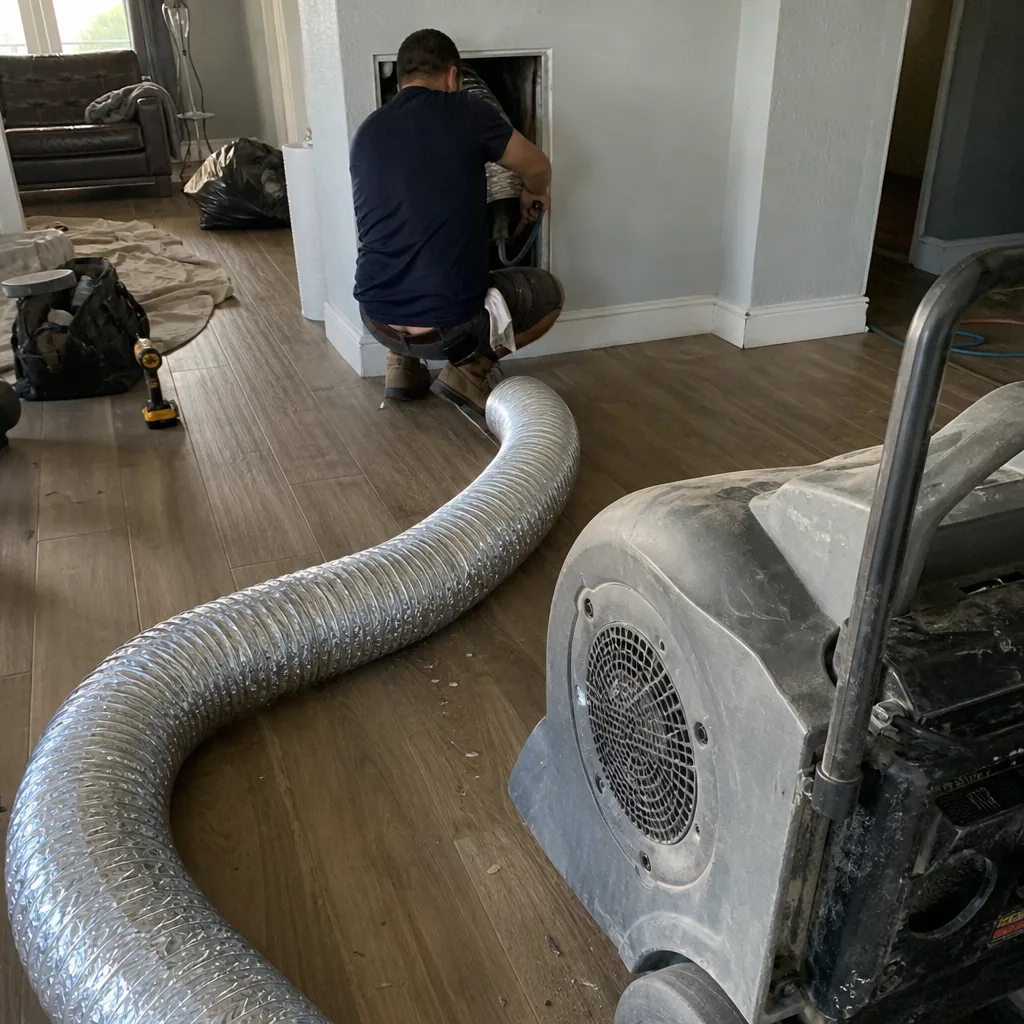 Before
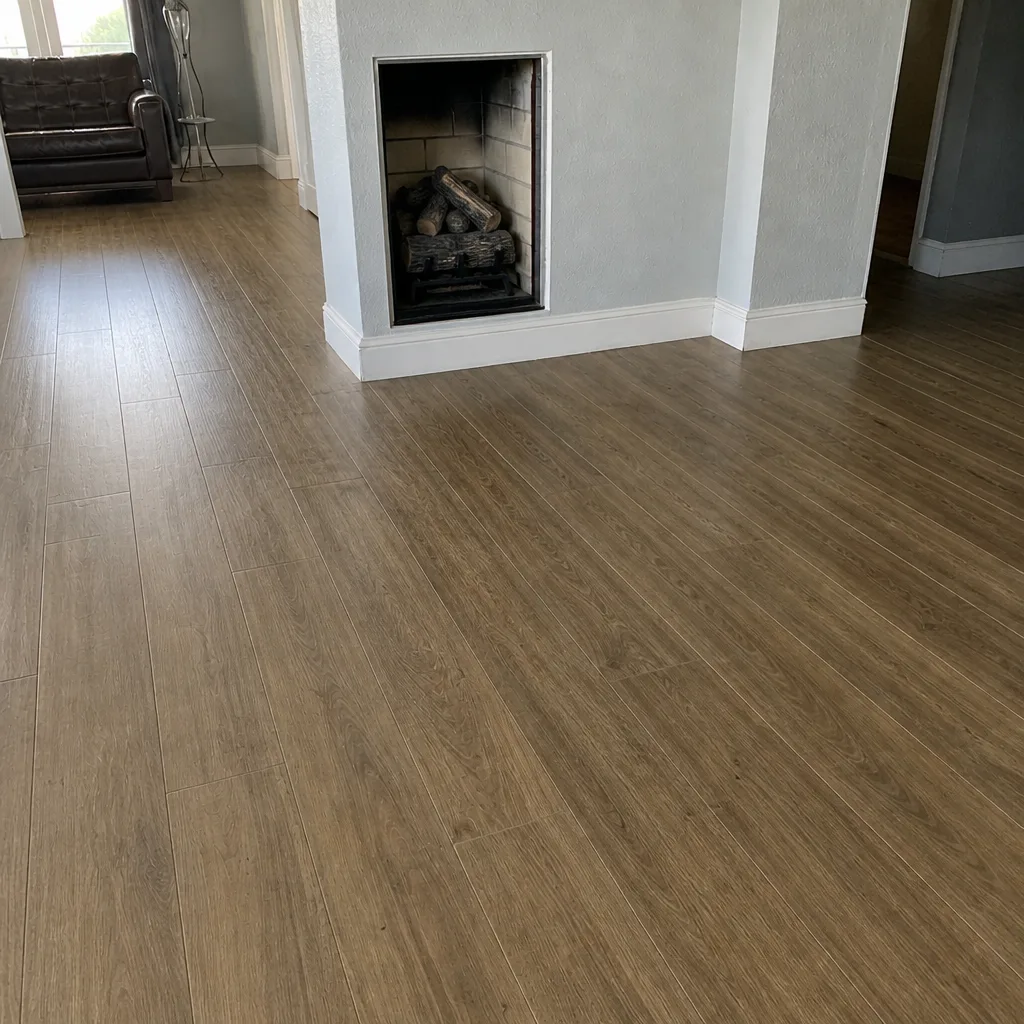 After
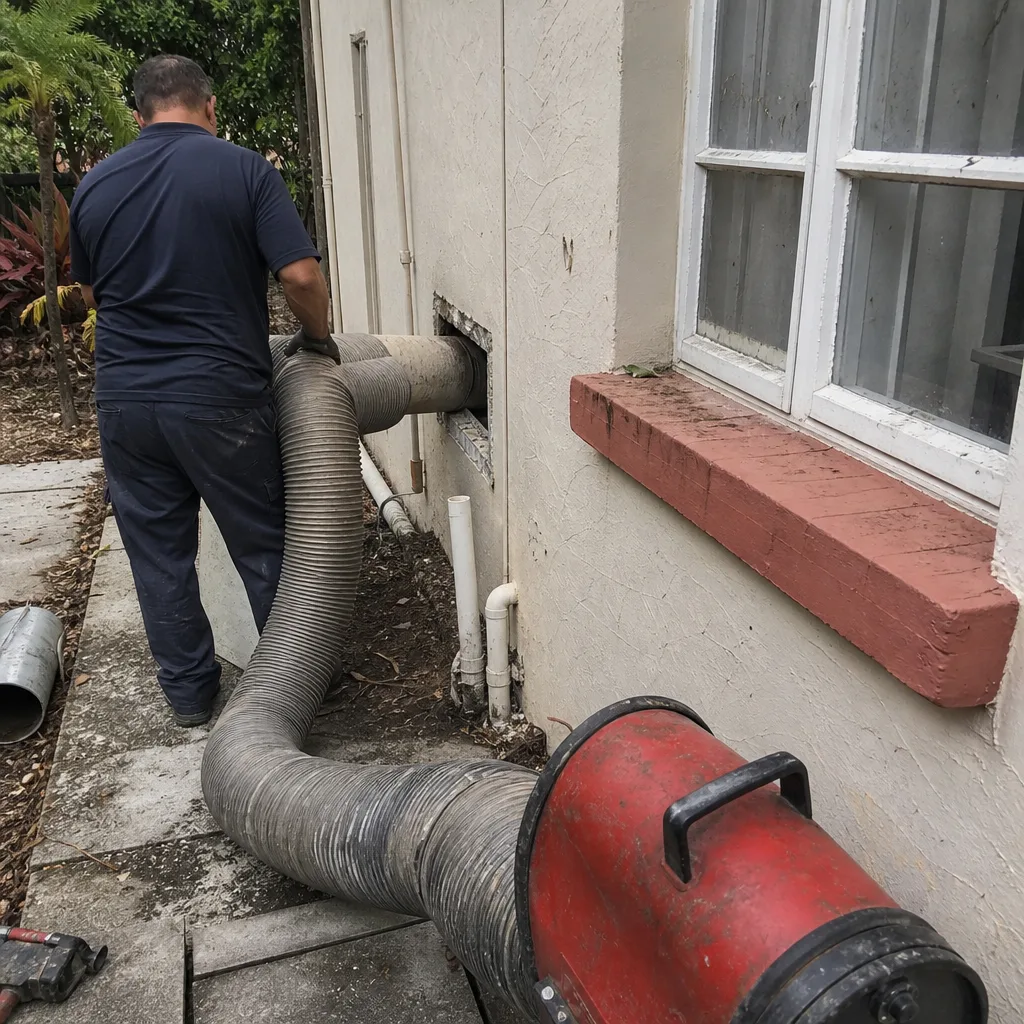 Before
 After
 Before
 After
Frequently Asked Questions
There’s no single schedule that fits every home, but Boca Raton’s year-round AC use and high humidity mean ducts tend to load up faster here than in dry or northern climates, so a system that runs most of the year often benefits from more frequent attention than national guidelines suggest. The honest answer is to have a technician assess your system and condition rather than guess. Call (888) 894-0255 for a free estimate and we’ll tell you what your specific system actually needs.
Cost depends on system size, number of runs, accessibility, condition of the ductwork, and whether repair or dryer vent work is added, which is why we price per system rather than per vent and confirm the price with a written estimate before work starts. That means no line-item surprises once the technician is on site. Call (888) 894-0255 for an exact quote – estimates are free.
Very low quotes usually reflect skipped steps: weaker portable vacuums instead of high-powered extraction, no mechanical agitation to break contamination loose, cleaning only the easy runs, and no post-cleaning documentation. The invoice can also grow once the technician arrives. Ask what equipment is included, how many runs it covers, and whether you’ll get before-and-after photos. Call (888) 894-0255 to compare a written, whole-system estimate.
Ask for before-and-after photos of your own ducts, a post-cleaning inspection, and confirmation that any access points were properly sealed afterward. Duct cleaning is invisible work, so documentation is the difference between knowing it happened and trusting that it did. Call (888) 894-0255 and we’ll walk through our process and what you’ll receive.
Not always. Flex duct from the 1970s – 1990s construction period can sag, tear its inner liner, or come loose at joints, and in those cases repair is part of doing the job right rather than cleaning around the damage. A technician should assess the duct condition first and tell you honestly what it needs. Ashton Air Duct Cleaning handles both cleaning and repair – call (888) 894-0255 for a free estimate.
Yes if it’s been a while. A clogged dryer vent is a fire-safety issue, not a maintenance nice-to-have, and it’s often the item homeowners put off because it’s out of sight. We include dryer vent cleaning as a core service so it can be handled in the same visit as your duct work. Call (888) 894-0255 to add it to your estimate.
The Bottom Line
Boca Raton’s climate and construction set the terms for duct cleaning here. Year-round AC use loads ducts faster. High humidity drives biofilm and moisture-related contamination that dry-climate guides never mention. The 1970s – 1990s housing boom left a lot of flex duct that degrades in specific, predictable ways. A cleaning that’s worth paying for addresses all three: professional-grade agitation and extraction, an inspection that follows the NADCA ACR standard, repair capability when ducts are actually damaged, and before-and-after photos so you can see the result. One flat price per system, agreed before work starts, sets the final number. Clean ducts. Repaired ducts. Done right.
Ready to have your system looked at? Call (888) 894-0255 for a free estimate. We answer 24/7. Fast dispatch from 7am to 7pm, Sunday through Friday.
Written by the team at Ashton Air Duct Cleaning.